An over-the-counter hearing aid is a medical device that makes sound louder. Since October 17, 2022, adults 18 and older with perceived mild to moderate hearing loss have been able to buy one in a store or online without an exam or a prescription. Audifort is a liquid dietary supplement. Its label says it "supports healthy hearing" and, as the law requires for that kind of claim, that it is not intended to diagnose, treat, cure or prevent any disease.
If following a conversation has become work, the device is the product built for that problem.
What the FDA says an OTC hearing aid is
The FDA's consumer page describes OTC hearing aids as air-conduction devices that need no surgery and send amplified sound into the ear canal. You adjust the settings yourself through tools, tests or software. The FDA regulates all hearing aids for safety and effectiveness, and it says it created the OTC category to make them easier to get.
The category has edges. OTC aids are not meant for severe or profound hearing loss, because their maximum output is capped, and anyone under 18 needs a prescription. The box has to list the signs of mild to moderate loss, which include:
- trouble hearing speech in noisy places
- finding it hard to follow speech in groups
- trouble hearing on the phone
- listening makes you tired
- turning up the TV or radio until other people say it is too loud
If you can't hear speech even in a quiet room, or loud things like engines don't come through well, the FDA sends you to a hearing health professional first.
What Audifort is, and what a supplement may claim
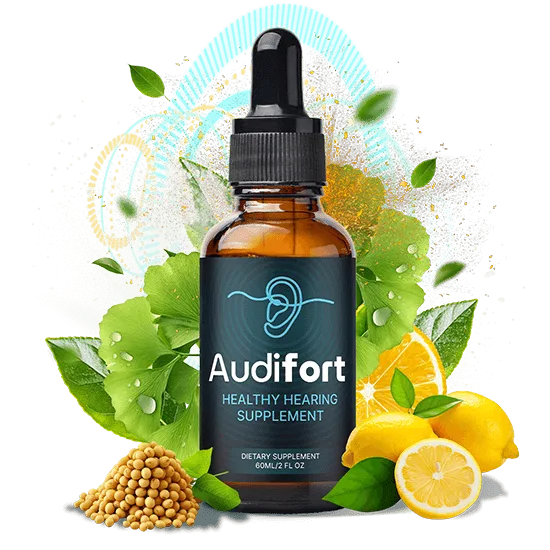
Audifort is taken by the dropper. Per the label, each 1 ml serving holds 0.7 mcg of chromium plus a 200 mg proprietary blend of 22 items: plant extracts, amino acids and two other compounds. The order page heading reads "Over 20 Carefully-Selected Ingredients That Support Healthy Hearing."
That wording is a claim about supporting a body function, and the rules for it are looser than for a device. Under DSHEA, the FDA does not have the authority to approve dietary supplements before they are marketed. A supplement sold to treat, prevent or cure a disease meets the legal definition of a drug. Our page on FDA approval has the details.
The two products side by side
| Question | OTC hearing aid | Audifort |
|---|---|---|
| What it is | Medical device worn in or behind the ear | Liquid dietary supplement, 1 ml serving |
| What it is meant to do | Amplify sound into the ear canal | Label: "supports healthy hearing"; not intended to diagnose, treat, cure or prevent any disease |
| FDA role before sale | FDA regulates all hearing aids for safety and effectiveness | FDA does not approve supplements before they are marketed |
| Who it is for | Adults 18 and older with perceived mild to moderate hearing loss | Label: ask a physician first if pregnant or nursing, under 18, or living with a known medical condition |
| How you get it | Store, online, or a hearing professional; no exam or prescription | The official order page, in packs of 2, 3 or 6 bottles |
| Return terms | Box must state the maker's return policy or say there is none; no warranty required | 90 days from original purchase, minus shipping and handling (order page, October 2026) |
How many adults could use a hearing aid and never have
NIDCD counts about 28.8 million US adults who could benefit from hearing aids. Among adults 70 and older who could benefit, fewer than 1 in 3 (30%) have ever used them. Among adults 20 to 69, the figure is about 16%.
About 28.8 million US adults could benefit from hearing aids, per NIDCD.
| Age group | Have ever used one |
|---|---|
| Adults 70 and older | 30% (fewer than 1 in 3) |
| Adults 20 to 69 | about 16% |
Source: NIDCD, Quick Statistics About Hearing, page last updated September 20, 2024.
Turned around, that is roughly 70% of the older group and 84% of the younger group who have never used an aid (our subtraction from NIDCD's numbers). Noise at work, tinnitus and the rest are on our hearing loss numbers page.
Signs to see a doctor before buying either one
Every OTC hearing aid box must carry a "When to See a Doctor" warning, and its red flags are just as relevant before you order a supplement. The FDA's list says to see a doctor, preferably an ear, nose and throat specialist, if:
- your ear has a birth defect or unusual shape, or was injured in an accident
- you saw blood, pus or fluid coming from the ear in the past 6 months
- the ear hurts or feels uncomfortable
- you have a lot of earwax or think something is stuck in the ear
- you get very dizzy or feel the room spin
- your hearing changed suddenly in the past 6 months, or gets worse and then better
- one ear hears worse than the other, or only one ear rings or buzzes
Ringing has its own page: Audifort and tinnitus. On the device side, NIDCD's tinnitus guide counts hearing aids among the main treatments when tinnitus comes with hearing loss.
Where Audifort fits
Neither the label nor the order page says Audifort amplifies sound, so the fair comparison is about purpose. If you recognize yourself in the FDA's list of signs, a hearing test, and a hearing aid if the test points that way, deal with the problem directly. A supplement does not replace either one. Some readers will still want to try Audifort next to that care. It is sold for a one-time payment, and the refund policy runs 90 days and takes back even empty bottles, minus shipping and handling.
From $49 a bottle · free US shipping on 3 and 6 packs
See the 2, 3 and 6 bottle packs →We earn a commission if you buy through this link.
One habit from the FDA page carries over to both purchases: read the return terms before you commit. The rules do not require OTC hearing aid makers to offer a warranty, so check the terms printed on the box before you open it. For Audifort, the detail to check is the date: the 90 days count from the original purchase, so shipping time comes out of the window.