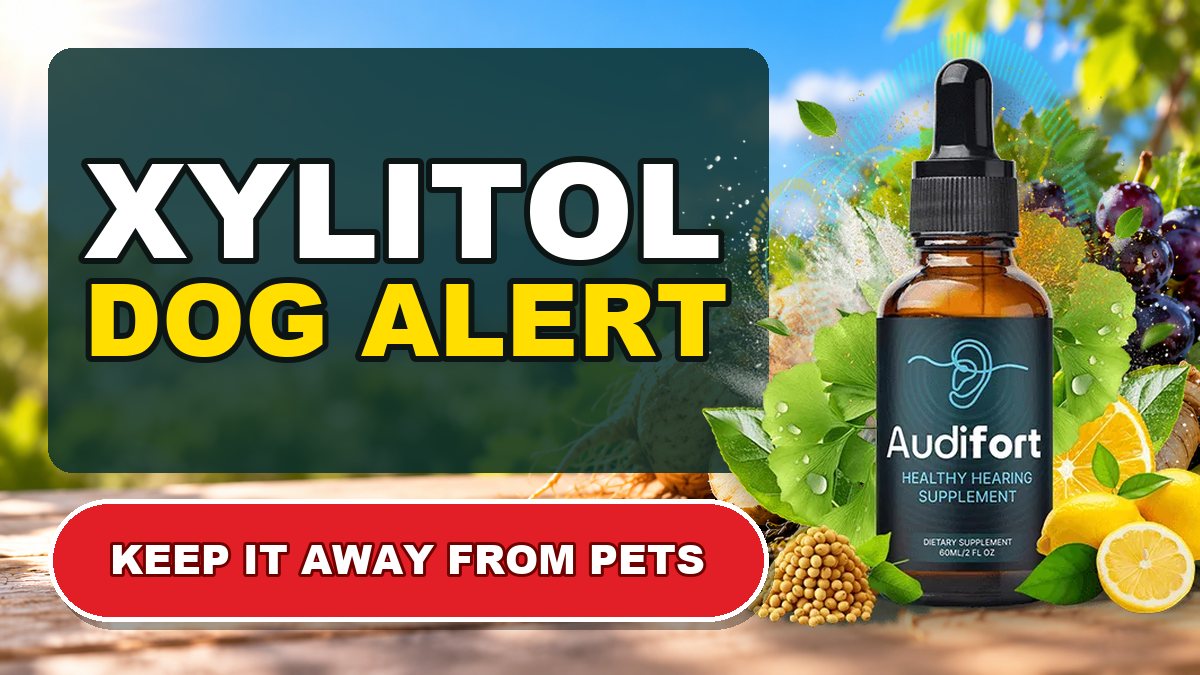
Yes, Audifort contains xylitol. It's printed in the "Other Ingredients" line on the label, with no amount given. The FDA warns that xylitol is dangerous for dogs and can set off a steep drop in blood sugar within 10 to 60 minutes. If you think your dog got into the bottle, call your vet, an emergency clinic or an animal poison control center right away.
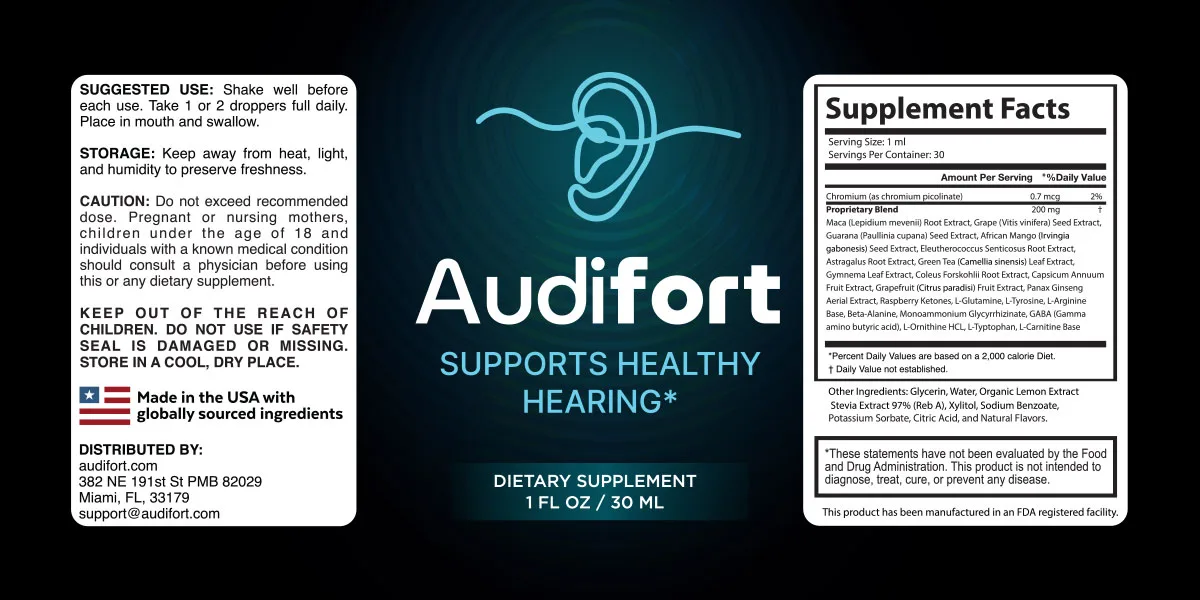
Where is xylitol on the Audifort label?
Below the Supplement Facts panel, the label lists nine other ingredients, the ones that make up the liquid itself. Xylitol is fifth.
| # | Other ingredient, as printed |
|---|---|
| 1 | Glycerin |
| 2 | Water |
| 3 | Organic lemon extract |
| 4 | Stevia extract 97% (Reb A) |
| 5 | Xylitol |
| 6 | Sodium benzoate |
| 7 | Potassium sorbate |
| 8 | Citric acid |
| 9 | Natural flavors |
Ingredient lists run heaviest to lightest under the federal rule, 21 CFR 101.4. So if the label follows it, there is less xylitol in the bottle than glycerin, water, lemon extract or stevia extract, and more than each of the four names after it. The order still says nothing about the actual amount. Nobody outside the company knows how much xylitol a dropper holds, and the FDA's warning gives no safe amount for dogs, so any amount your dog swallowed is a reason to pick up the phone. The rest of the formula is on our ingredients page.
What does xylitol do to a dog?
The FDA's consumer update on xylitol and dogs explains it this way. In dogs, xylitol gets into the bloodstream fast and can cause a strong release of insulin from the pancreas. Blood sugar then falls quickly, which is called hypoglycemia, and that can happen within 10 to 60 minutes of eating it. Left untreated, it can quickly become life-threatening.
The first sign the FDA lists is vomiting. Then come the signs of low blood sugar: decreased activity, weakness, staggering, poor coordination, collapse and seizures. The timing isn't always fast, though. In some cases, the FDA says, hypoglycemia and other serious effects may not show up for 12 to 24 hours, which is why a dog may need to stay at the clinic for monitoring.
- 10 to 60 min
- how soon a dog's blood sugar can drop after eating xylitol
- 12 to 24 h
- how long serious effects can take to appear in some cases
- 5th of 9
- xylitol's place in Audifort's other ingredients, no amount given
- 24/7
- ASPCA Animal Poison Control, (888) 426-4435; a fee may apply
Sources: FDA, Paws Off Xylitol; ASPCA Animal Poison Control; Audifort label, October 2026.
What should you do if your dog gets into the bottle?
- Take the bottle away, along with anything it dripped on, and keep the dog in sight.
- Call right away, even if your dog seems fine. Try your vet or an emergency animal hospital, or call ASPCA Animal Poison Control at (888) 426-4435. The ASPCA line runs 24 hours a day, 365 days a year, and says a consultation fee may apply.
- Keep the bottle in your hand while you talk so you can read the full ingredient list to whoever answers.
- Work out how much could be missing. A full bottle holds 30 ml, or 30 full droppers. Count the doses you've taken, subtract them from 30, and compare that with what's still in the bottle.
- Do what the vet tells you. Don't wait to see whether symptoms appear, since they can be delayed.
How should you store Audifort if you have a dog?
The label already says to keep it out of the reach of children and to store it in a cool, dry place. Give a dog the same respect. The FDA's advice is to keep anything with xylitol "well out of your dog's reach," and it reminds owners that some dogs are good at counter surfing.
In practice that means a closed cabinet. A nightstand, a low counter or an open handbag is a bad spot for a small dropper bottle. If you mix your dose into water or juice, drink it rather than leaving the glass on a coffee table. Our guide to taking Audifort covers the rest of the routine.
While you're at it, check the rest of the house. The FDA lists sugar-free gum, breath mints, toothpaste, mouthwash, some nut butters, chewable vitamins and dietary supplements among the products that may contain xylitol, which may also appear as birch sugar or wood sugar.
From $49 a bottle · free US shipping on 3 and 6 packs
See the 2, 3 and 6 bottle packs →We earn a commission if you buy through this link.
Are cats or people at risk too?
Cats seem to be at lower risk. The FDA says xylitol doesn't seem as dangerous for cats and other pets, partly because cats don't care much for sweets. Ferrets are the exception it names: they've been known to get low blood sugar and seizures after eating xylitol, the same way dogs do.
For people, the FDA says xylitol does not trigger insulin release the way it does in dogs. If you're weighing whether Audifort suits you, the label cautions and the caffeine and licorice ingredients are the parts that apply to you, and our page on who should skip Audifort lays those out.
One small step before you open the first bottle: save (888) 426-4435 in your phone under "pet poison," and tape your vet's after-hours number inside the cabinet where Audifort will live. When trouble can start within 10 minutes, you don't want to be scrolling for a phone number.