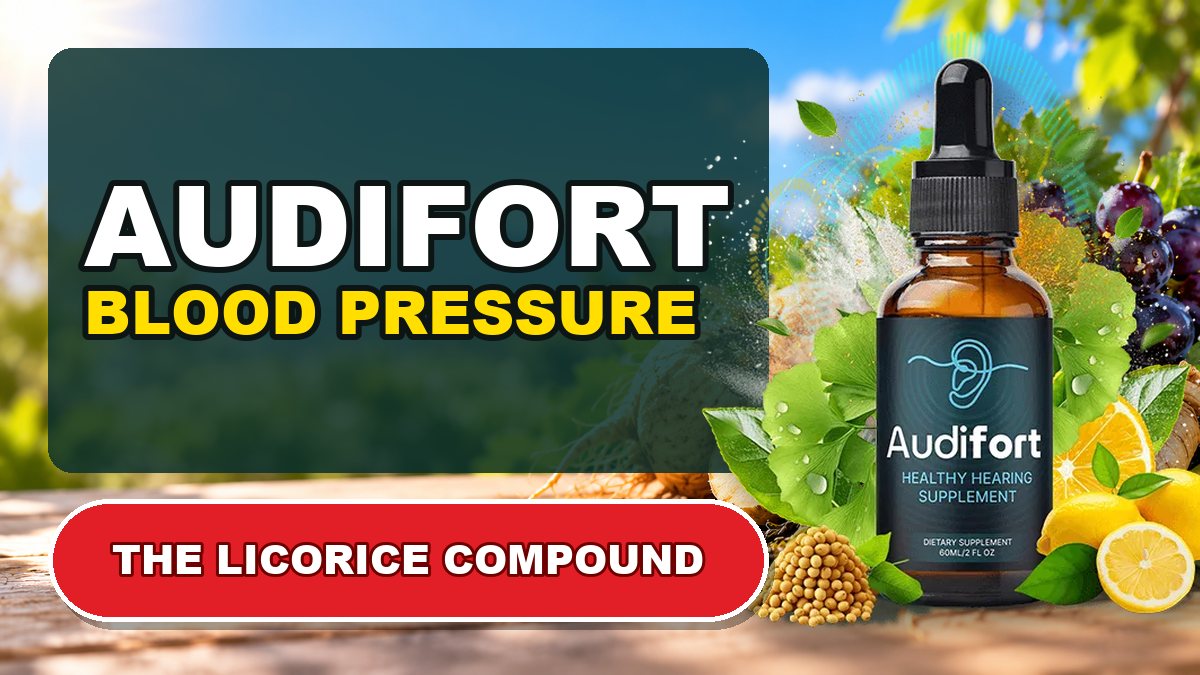
If you have high blood pressure, a heart or kidney condition, or a salty diet, talk to your doctor before you take Audifort. The reason is a single entry in its blend: monoammonium glycyrrhizinate, a compound made from licorice root. According to NCCIH, glycyrrhizin can be risky for exactly those people even in small doses, and the Audifort label gives no amount for it.
What monoammonium glycyrrhizinate is
Federal food rules spell out how it's made. Under 21 CFR 184.1408, a water extract of licorice root goes through acid precipitation and is then neutralized with dilute ammonia, which gives ammoniated glycyrrhizin. Monoammonium glycyrrhizinate is separated from that by solvent extraction. Put simply, it's a purified salt of glycyrrhizin, the licorice compound NCCIH warns about.
In ordinary foods the same rule lists its job as flavoring. Audifort's label doesn't say what it's there for. It appears in the 200 mg proprietary blend between beta-alanine and GABA, one of 22 ingredients on the label, and like the other 21 it has no amount next to it.
What NCCIH says about glycyrrhizin
The NCCIH page on licorice root starts mildly: licorice root is "generally considered safe as a food ingredient." The problem is glycyrrhizin. NCCIH says it can cause serious adverse effects, such as irregular heartbeat and cardiac arrest, especially in large amounts or with long-term use.
Then comes the line that matters for this page. NCCIH writes that "even small amounts of glycyrrhizin from licorice root products have been linked to severe adverse effects" in three situations: people who consume a lot of salt, people with hypertension, and people with heart or kidney conditions.
NCCIH also mentions licorice with the glycyrrhizin taken out, called deglycyrrhizinated licorice or DGL, and says it might be safe for up to four months. Audifort's ingredient goes the other way. It is glycyrrhizin itself, in salt form.
Who should ask a doctor before starting
These are the groups NCCIH and the Audifort label single out. If you're in any of them, the bottle's own caution for people with "a known medical condition" already applies to you.
| Your situation | What the source says | Our suggestion |
|---|---|---|
| High blood pressure | NCCIH: even small amounts of glycyrrhizin linked to severe adverse effects | Ask your doctor first and bring the label |
| A heart condition | NCCIH: same warning | Ask your cardiologist or primary care doctor first |
| A kidney condition | NCCIH: same warning | Ask the doctor who manages it |
| A lot of salt in your diet | NCCIH: same warning | Mention it when you ask |
| Corticosteroid medicine | NCCIH: interactions between licorice and corticosteroids have been reported | Ask the prescriber |
| Pregnancy or nursing | Label: consult a physician. NCCIH: large amounts of licorice in pregnancy are unsafe; little is known about breastfeeding | Ask before using |
| Any regular medicine | NCCIH: talk with your provider before using licorice or other herbal products | Take the bottle to your next visit |
How much glycyrrhizin is in a dropper
The label doesn't say, and we won't guess. The Supplement Facts panel gives a single total for the blend, and a share we made up for one ingredient would be a number with nothing behind it. Our page on the proprietary blend covers why the label can leave the split out. The FDA's supplement Q&A adds that, beyond meeting safety and labeling duties, no law limits the amount of a dietary ingredient in a serving; the manufacturer decides.
The directions widen the range further. The order page says one dropper a day, while the bottle says one or two, and two droppers means twice the amount, whatever it is.
For a sense of how closely glycyrrhizin is controlled when it's used to flavor ordinary foods, the same federal rule sets maximum levels by food type. For most categories the cap is below 1% of the food as served; candy and chewing gum are allowed more.
Maximum glycyrrhizin as a percent of the food as served, when licorice or its derivatives are used for flavor. Hard candy, capped at 16%, is left off so the smaller bars stay readable. These are food limits, not a measurement of Audifort.
| Food category | Maximum glycyrrhizin |
|---|---|
| Baked foods | 0.05% |
| All other foods (except sugar substitutes) | 0.1% |
| Alcoholic beverages | 0.1% |
| Nonalcoholic beverages | 0.15% |
| Herbs and seasonings | 0.15% |
| Vitamin or mineral dietary supplements | 0.5% |
| Chewing gum | 1.1% |
| Soft candy | 3.1% |
These limits apply to licorice used as a flavoring in foods. Without a glycyrrhizin figure from Audifort, there's nothing to hold them against.
From $49 a bottle · free US shipping on 3 and 6 packs
See the 2, 3 and 6 bottle packs →We earn a commission if you buy through this link.
Signs to take seriously
Irregular heartbeat is the first effect NCCIH names, and it's also on the FDA's list of serious reactions to a dietary supplement, together with palpitations, low blood pressure, fainting, chest pain and shortness of breath. For a suspected serious reaction, the FDA says to stop the product immediately, then tell the agency about it on the Safety Reporting Portal. Get medical care first; the paperwork can wait.
If your doctor clears you to try it, ask whether checking your blood pressure at home during the first few weeks makes sense, so you have readings from before you started to compare against. Our side effects page covers the blend's other ingredients with known warnings.